


Table of Contents
If you have walked through a modern airport terminal, visited a shopping mall with a dramatic curved roof, or parked your car under a fabric shed, you have already seen a tensile structure. These structures are rapidly replacing conventional roofing and shading systems across India — and for good reason.
In this guide, Tensile Craft Pvt. Ltd., a tensile structure manufacturer based in New Delhi with installations across India, explains what tensile structures are, how they work, and why they matter for your next construction project.
1. Definition of Tensile Structure
A tensile structure is a construction system in which the primary load-carrying element is a fabric membrane that is held in tension. Unlike conventional buildings that rely on compression (walls, columns bearing weight from above), a tensile structure works exclusively through tension forces — the fabric is pulled tight between anchor points to form a stable, weather-resistant surface.
The simplest way to understand it is to think of a camping tent. The tent fabric gains its shape and strength not from being rigid, but from being stretched between poles and pegs. A tensile structure applies this same principle at an architectural scale, using engineered fabrics and precision-designed steel frameworks to create permanent or semi-permanent buildings.
Key Point: In a tensile structure, the fabric cannot carry compression or bending loads — it can only carry tension. This is why the shape must always have double curvature (curving in at least two directions) to remain stable under wind and other external forces.
The term covers a wide range of structures: from a small tensile umbrella at a cafe to a massive dome structure covering a stadium. What connects them all is the use of a tensioned fabric membrane as the primary building envelope.
2. How Does a Tensile Structure Work?
Understanding the engineering behind tensile structures helps you appreciate why they are safe, durable, and efficient. Here are the three fundamental principles:
2.1 Pre-Tension
Before any external load (wind, rain, snow) acts on the structure, the fabric is already pulled tight — this is called pre-tension. Pre-tension is typically in the range of 1-5 kN/m depending on the fabric type and span. This pre-stress ensures the membrane never goes slack, which would cause fluttering, water ponding, and eventual damage.
2.2 Double Curvature (Anticlastic Surface)
A flat fabric stretched between two points would flap in the wind. To prevent this, tensile structures are designed with double curvature — the surface curves in opposing directions at every point, like a saddle. Common double-curved forms include:
- Hypar (Hyperbolic Paraboloid): Two high points and two low points — used in entrance canopies
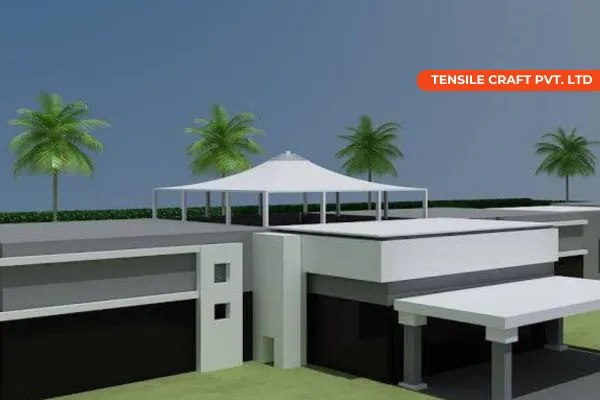
- Conical: One high point with a circular or polygonal base — used in umbrella structures
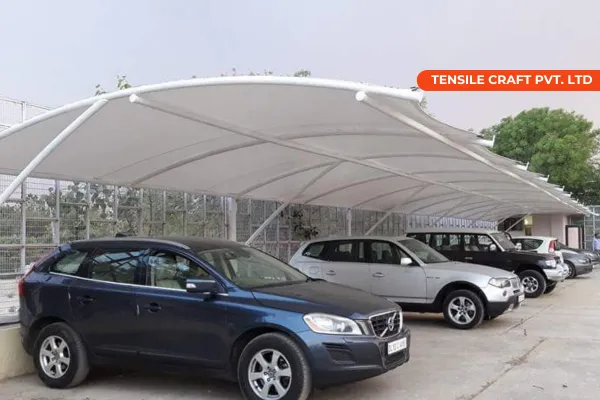
- Barrel Vault: Curved in one direction with arch supports — used in walkway coverings
2.3 Load Transfer Path
When wind or rain hits the fabric, the force is transferred through a clear path:
- Fabric membrane receives the load and distributes it across the surface
- Edge cables and clamp plates collect the forces from the fabric edges
- Masts, arches, or columns carry the forces downward
- Foundation anchors the entire system to the ground, resisting both downward and uplift forces
Because this path is so direct, tensile structures use far less material than conventional construction to cover the same area.
3. Main Components of a Tensile Structure
Every tensile structure, regardless of size or shape, consists of three essential systems:
3.1 Fabric Membrane (The Roof Surface)
This is the visible, functional part of the structure. It provides shelter, transmits light, and carries loads through tension. The two most common fabrics used in India are:
- PVC-coated Polyester: Cost-effective (₹350-600/sq.m), available in many colours, 15-20 year lifespan. Used in car parking structures, walkways, and commercial canopies.
- PTFE-coated Fiberglass: Premium option (₹800-1200/sq.m), self-cleaning, 25-30 year lifespan. Used in airports, stadiums, and landmark architectural projects.
For a detailed comparison, read our guide: PTFE vs PVC Tensile Fabric: Which is Better?
3.2 Structural Framework (The Support System)
This is the steel or aluminum skeleton that holds the fabric in position and transfers loads to the ground:
- Masts/Columns: Vertical supports, typically made of MS (Mild Steel) pipes, galvanized and powder-coated for corrosion resistance
- Arches: Curved supports for barrel vault designs, fabricated from steel tubes or I-sections
- Boundary Cables: Stainless steel cables running along the fabric edges to define the shape and carry edge tensions
- Base Plates and Foundations: Connection between the steel structure and concrete foundation, designed to resist both compression and uplift
3.3 Connection Hardware (The Joints)
These are the critical components where fabric meets steel:
- Aluminum or stainless steel clamp plates that grip the fabric edge
- Corner plates with adjustable turnbuckles for precise tensioning
- Catenary cables at fabric edges for smooth load transfer
- Shackles, thimbles, and eye bolts for cable terminations
Planning a Tensile Structure Project?
Get a free consultation and detailed quotation from Tensile Craft — India's trusted manufacturer with 500+ installations.
Call: +91-92177185464. Types of Tensile Structures
Tensile structures can be classified in two ways — by their structural form and by their application.
4.1 By Structural Form
| Type | Shape | Best For |
|---|---|---|
| Conical / Umbrella | Single high point, circular base | Umbrella structures, small canopies |
| Hypar (Saddle) | 2 high + 2 low points | Entrance canopies, amphitheatres |
| Barrel Vault | Arched cross-section | Walkways, corridors, platforms |
| Dome | Radial from central peak | Stadiums, exhibition halls, mosques |
| Wave / Free Form | Organic flowing curves | Architectural landmarks, malls |
4.2 By Application
Tensile structures serve a wide range of purposes in the Indian construction industry:
- Tensile Car Parking Structures — The single largest application in India. Protects vehicles from sun, rain, and hail. Available in single, double, and multi-bay configurations.
- Walkway Coverings — Covered pedestrian paths for IT parks, hospitals, metro stations, and educational campuses.
- Roof Structures — Large-span roofing for auditoriums, sports facilities, warehouses, and industrial buildings.
- Swimming Pool Covers — UV protection and debris prevention for residential and hotel pools.
- Awnings & Canopies — Shop front shade, restaurant outdoor dining, balcony covers, and window sun protection.
- Gazebo Structures — Garden pavilions, resort outdoor areas, and luxury residential landscaping.
- Entrance Structures — Grand entry canopies for hotels, corporate offices, malls, and residential towers.
- Dome Structures — Iconic roofing for stadiums, convention centers, and religious buildings.
- Polycarbonate Sheet Structures — Hybrid systems combining polycarbonate panels with tensile steel frameworks for translucent roofing.
- Lightweight Structures — Temporary or semi-permanent installations for events, exhibitions, and disaster relief shelters.
5. Applications of Tensile Structures in India
India has embraced tensile structures across virtually every sector of construction. Here is where you will find them most commonly:
5.1 Residential Sector
The residential market is the fastest-growing segment for tensile structures in India. Homeowners and housing societies install tensile car parking shades to protect vehicles from the harsh summer sun and monsoon rains. Unlike concrete sheds, tensile car parks are lighter, faster to install, and do not require heavy civil work. Gazebo structures and pool covers are also popular in luxury homes and villas.
5.2 Commercial & Retail
Shopping malls, retail chains, and hospitality businesses use awning and canopy structures for shop fronts and outdoor dining areas. Entrance canopies create an impressive first impression for hotels, corporate offices, and mixed-use developments. The aesthetic appeal of tensile structures makes them a preferred choice for brand-conscious businesses.
5.3 Educational & Institutional
Schools, colleges, and universities across India are installing tensile walkway coverings to connect buildings, providing students and staff shelter from rain and sun. Auditoriums and assembly halls use tensile roof structures for large-span coverage without columns obstructing the view.
5.4 Industrial
Factories, warehouses, and logistics hubs use tensile structures for multi-level car parking, loading bay covers, and material storage sheds. The speed of installation means minimal disruption to operations — a critical factor for industrial clients.
5.5 Public Infrastructure
Airport terminals (tensile membrane roofs), metro station covers, bus stop shelters, and sports stadium roofing all rely on tensile technology. The Jawaharlal Nehru Stadium in Delhi and Chhatrapati Shivaji International Airport in Mumbai are notable Indian examples of tensile architecture at scale.
6. Materials Used in Tensile Structures
The choice of fabric is the single most important decision in a tensile structure project. It determines the lifespan, appearance, maintenance needs, and cost. Here is a practical comparison of the fabrics used in India:
| Property | PVC Polyester | PTFE Fiberglass | HDPE |
|---|---|---|---|
| Full Form | Polyvinyl Chloride | Polytetrafluoroethylene | High-Density Polyethylene |
| Lifespan | 15-20 years | 25-30 years | 5-10 years |
| Cost (per sq.m) | ₹350 - ₹600 | ₹800 - ₹1,200 | ₹80 - ₹200 |
| UV Resistance | Good (with PVDF top coat) | Excellent (inherent) | Good |
| Self-Cleaning | No | Yes | No |
| Fire Rating | B1 (self-extinguishing) | A (non-combustible) | C (flammable) |
| Light Transmission | 8-15% | 10-25% | 30-70% |
| Color Options | Wide range | Mostly white | Limited |
| Best Use | Car parking, walkways, canopies | Stadiums, airports, iconic architecture | Shade nets, temporary structures, agriculture |
At Tensile Craft, we recommend PVC-coated polyester with a PVDF (Polyvinylidene Fluoride) top coat for most Indian projects. The PVDF layer significantly improves UV resistance and reduces dirt accumulation, extending the fabric's effective life by 3-5 years compared to standard PVC.
The steel framework is typically fabricated from IS 2062 Grade E250 mild steel, hot-dip galvanized (IS 2629 / IS 2633) and finished with polyester powder coating for long-term corrosion protection — essential in India's humid and coastal climates.
7. Advantages Over Conventional Construction
Why should you choose a tensile structure over a conventional concrete, metal sheet, or polycarbonate roof? Here are the quantifiable advantages:
- 90-95% Lighter: Tensile fabric membranes weigh just 1-5 kg per square meter, compared to 50-100 kg for conventional roofing. This means smaller foundations, less structural steel, and lower civil costs.
- Column-Free Spans: Tensile structures can span 50-100+ meters without intermediate columns. This is impossible with conventional roofing at reasonable cost, making them ideal for large roof structures.
- 5x Faster Installation: A typical car parking structure for 50 cars is installed in 7-15 days. Conventional construction would take 2-3 months.
- 30-50% Lower Cost: For equivalent coverage, tensile structures cost significantly less per square foot. Detailed pricing is available in our Tensile Structure Cost Guide 2026.
- Natural Daylight: Translucent fabrics transmit 8-25% of natural light, reducing daytime electricity consumption for lighting by up to 40%.
- Low Maintenance: PTFE fabrics are self-cleaning. PVC fabrics require periodic washing. Either way, maintenance costs are a fraction of conventional roofs. Read our 20 Maintenance Tips for detailed guidance.
- Weather-Engineered for India: Designed as per IS 875 Part 3 for wind loads, IS 800 for steel design, and tested for Indian temperature extremes (-10°C to +70°C).
- Aesthetic Value: The curved, flowing forms of tensile structures create visually striking architecture that enhances property value and brand image.
- Sustainable: Less material consumption, recyclable fabrics, reduced energy for lighting, and smaller carbon footprint compared to concrete construction.
- Relocatable: Unlike concrete, tensile structures can be dismantled and re-erected at a different location — useful for temporary installations or leasehold properties.
8. Indian Standards & Design Codes
Professional tensile structure design in India must comply with several Bureau of Indian Standards (BIS) codes. At Tensile Craft, our engineering team follows these standards rigorously:
| Standard | Title | Relevance |
|---|---|---|
| IS 875 Part 3 | Code of Practice for Design Loads — Wind Loads | Determines wind pressure coefficients for tensile surfaces |
| IS 875 Part 2 | Code of Practice for Design Loads — Imposed Loads | Live loads, rain loads, and maintenance access loads |
| IS 800 | General Construction in Steel | Design of steel masts, arches, and connection hardware |
| IS 2062 | Hot Rolled Low Carbon Steel | Material specification for structural steel members |
| IS 2629 / IS 2633 | Hot Dip Galvanizing | Corrosion protection for steel framework |
| IS 6746 | Tensile Testing of Fabrics | Testing tensile strength and elongation of membrane fabrics |
Additionally, international standards such as ISO 10211 (thermal analysis), EN 13782 (temporary fabric structures), and ASCE 17-96 (tensile membrane structures) are referenced where Indian standards do not specifically cover membrane behavior. Our design team uses specialized software for form-finding, load analysis, and patterning to ensure every structure meets or exceeds these requirements.
Want an Engineered Tensile Structure?
Every Tensile Craft project comes with structural calculations, fabrication drawings, and IS-compliant design. Get started today.
Request Free Quotation9. Frequently Asked Questions
What is a tensile structure in simple words?
A tensile structure is a lightweight construction that uses a fabric membrane stretched tightly over a metal framework to create a roof or cover. It works only on tension force — no compression or bending — similar to how a tent works but built with engineering-grade materials for permanent use.
What is the lifespan of a tensile structure in India?
In Indian climate conditions, PVC tensile fabrics last 15-20 years and PTFE fabrics last 25-30 years. The steel framework, if galvanized and maintained properly, can last 40+ years. Lifespan depends on fabric quality, installation precision, and maintenance frequency.
Is tensile structure good for Indian weather?
Yes. Tensile structures are specifically engineered for Indian weather. They are designed as per IS 875 for wind loads (up to 120-150 km/h), have UV protection rated UPF 50+, handle monsoon rainfall through smooth water runoff, and perform in temperatures ranging from -10°C to +70°C.
What is the difference between tensile structure and conventional roofing?
Tensile structures use fabric membranes under tension instead of concrete, steel sheets, or tiles. They are 80-95% lighter, install 5x faster, cost 30-50% less per square foot, allow natural daylight, and offer curved aesthetic designs that conventional roofing cannot achieve.
Which fabric is best for tensile structure in India?
For most Indian projects, PVC-coated polyester fabric is the best balance of cost and performance (₹350-600 per sq.m, 15-20 year life). For premium projects requiring self-cleaning and 30-year lifespan, PTFE-coated fiberglass is ideal (₹800-1200 per sq.m). The choice depends on budget, location, and expected lifespan.
Can tensile structures be used for car parking?
Tensile car parking structures are one of the most popular applications in India. They provide UV protection, rain shelter, and better ventilation than conventional concrete sheds. They are available in conical, saddle, and barrel vault designs, typically costing ₹250-450 per sq.ft. depending on design and fabric choice. Explore our tensile car parking range.
Is tensile structure cheaper than concrete?
Yes, significantly. For a car parking shed covering 2,000 sq.ft., a concrete structure would cost approximately ₹3-5 lakhs and take 2-3 months. A tensile car parking structure of the same size would cost approximately ₹1.5-2.5 lakhs and be installed in 7-15 days. The savings increase with larger spans.
Can tensile structures withstand heavy rainfall?
Yes. Tensile membranes are designed with a minimum slope of 15-25 degrees to ensure rapid water runoff. The pre-tension in the fabric prevents sagging and water ponding. Properly designed tensile structures handle Indian monsoon rainfall of 100-200 mm/hour without any issues.
Related Articles
Continue reading more about tensile structures
Tensile Car Parking: Ultimate Guide 2026
Complete guide to tensile car parking — designs, costs, materials, and installation process for Indian projects.
Car Parking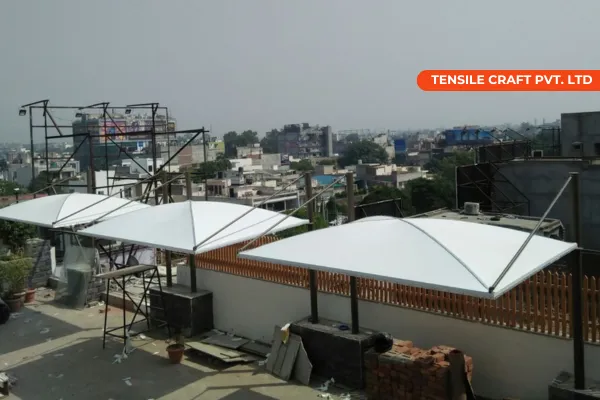
Tensile Structure Cost in India 2026
Detailed per sq.ft pricing for all types of tensile structures — cost factors and money-saving tips.
Cost Guide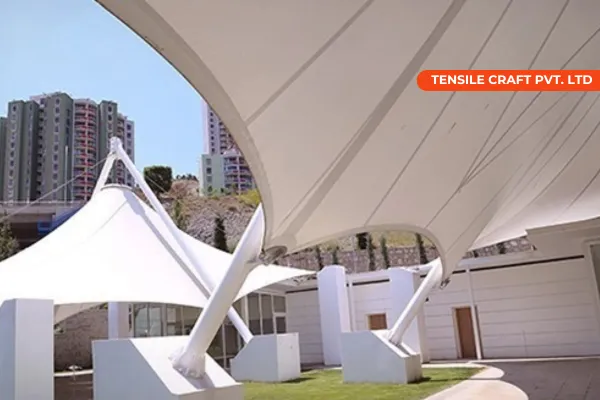
PTFE vs PVC Tensile Fabric: Which is Better?
Head-to-head comparison of PTFE and PVC fabrics — durability, cost, and best use cases in India.
Materials